Windows XP folder for sale on Ebay
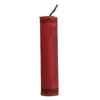
A man is selling what he claims is a genuine Windows XP folder on Ebay.
He says that he created it on the 24th of January but he no longer requires it. The folder is in mint condition and has never been used.
So it's in "immaculate condition".
Until Ebay wakes up and dumps it, we suspect.
Linux aids Axis of Evil, SCO claims

SCO has written a letter to politicos in Washington DC which alleges that Linux threatens the US economy, technological innovation, its grip over the global software industry and last, but surely not least, "our national security".
Some believe, says Darl McBride, for it is he who has taken pen to paper, that the GNU General Public Licence is in direct contradiction to US copyright law, and to the Digital Millennium Copyright Act.
But Open Source software, says Darl, "has the potential to provide our nation's enemies or potential enemies with computing capabilities that are restricted by law".
He said: "Someone could build a supercomputer for military applications... but a computer expert in North Korea who has a number of computers... could, in short order, build a virtual supercomputer".
UW scientists want to mine moon energy

Two University of Wisconsin-Madison scientists believe moon rocks contain all the energy the United States needs for the next millennium.
The moon’s surface is full of the energy source helium-3, said Gerald Kulcinski, a nuclear engineering professor and director of the Fusion Technology Institute at UW.
"If we could land the space shuttle on the moon, fill the cargo with canisters of helium-3 mined from the surface and bring the shuttle back to Earth, that cargo would supply the entire electrical power needs of the United States for an entire year," he said.
The team estimates the moon probably holds more than 1 million metric tons of helium-3 on its surface, more than enough energy to provide the nation with more than 1,000 years of electricity.
PopUp Ad Service Beats PopUp Blockers

A California rich media company has launched the Popstitial, a new way for advertisers and Web publishers to serve popup style advertising to web users who have popup blockers on their computer.
The "Popstitial' has been developed by FPBA Group, a rich-media technology company. While the popstitial doesn't defeat pop blockers, it instead determines whether a popup blocker is being used. If so, Popstitial then serves up a full-page advertisement that can either be a separate ad - using Flash, video, animation or static images - or the same style as the missed pop-up/pop-under.
CD prices to rise after court settlement

Britain's music lovers are facing the prospect of paying more for their CDs today, after the music industry forced an online retailer to stop importing cheaper CDs for sale in the UK.
CD Wow!, the Hong Kong-based online retailer, has agreed to stop sourcing its CDs from Asia and other regions outside the European Union, which will add £2 to the retail price of its CDs.
Mr Robinson said the price of CDs would rise from £8.99 to £10.99 from Sunday.
The BPI admitted that the CDs imported by CD Wow! were genuine products bought from subsidiaries of UK record companies, but argued that they had been sold in the UK without their consent.
Mole rat's magnetic magic revealed

The blind mole rat continually monitors its direction using the Earth's magnetic field when it makes long underground journeys, new research has revealed. It is first animal discovered to have this talent.
How animals use magnetic compasses is not well understood. But some research suggests that it relies on magnetite crystals located next to the animals' olfactory region.
"Even we may have this system," Kimchi speculates. "There are said to be people who spend a lot of time in caves, who can find the direction of magnetic north in the dark."
Microsoft lawyers threaten Mike Rowe
In what could easily be mistaken for an Onion story, Microsoft has unleashed the full fury of its lawyers on 17-year-old Canadian high-school student, Mike Rowe, demanding the handover of his Internet domain.
The domain? MikeRoweSoft.com. No, seriously.
Mike told us that when an email from Microsoft's Canadian lawyers Smart & Biggar arrived on 19 November laying out its complaint, he was "amazed and appalled". He replied saying he didn't want to hand over the domain and didn't feel there was any risk it would damage Microsoft's name.
By making the situation public though, Mike tells us he has been bolstered. "After going to the press, I have realised that I should stick it out till the end. After the massive amount of support I have received from people across the globe I am motivated to stick with what I believe in."
Crypto plan to anonymise P2P, thwart RIAA

Leading P2P activists have reacted to the prospect of the extension of a legal crackdown on file swappers in the UK with plans to build greater anonymity into their networks.
The developers of popular P2P app Blubster, which boasts an estimated four million users, plan to incorporate encryption technology and other techniques to give file-sharers greater anonymity. The scheme would mean that files were downloaded through a number of machines and only pieced together at a requesting computer.
"Each time they say that the sky is falling in. Now they want to blame file-sharing for all their problems."
"It's hurt their business - but nowhere near as much as what they claim," he added.
Nuclear fusion row going critical
The debate over whether to build the world's biggest nuclear fusion facility in France or Japan is going critical. The European Union says it could pull out of the international project and build its own, if the project goes to Japan. But the US has firmly backed Japan as its preferred site.
Critics allege the US support for Japan is to punish France for its opposition to the war in Iraq, or to enlist Japan's help in an expensive particle accelerator project called the Linear Collider.
Whatever the motivation, the decision is being based purely on politics, says ITER's former deputy director Ronald Parker, at the Massachusetts Institute of Technology. "No scientists are being consulted about the advantages or disadvantages of each location," he told New Scientist.
Report: Illegal Music Downloading Climbs
LOS ANGELES - The number of people downloading music illegally surged a month after recording companies began suing hundreds of music fans, a marketing research firm said Thursday.
The number of U.S. households downloading music from peer-to-peer networks rose 6 percent in October and 7 percent in November after a six-month decline, according to a study of computer use in 10,000 U.S. households conducted by The NPD Group.
Jonathan Lamy, a spokesman for the Washington-based RIAA, which coordinates the industry's anti-piracy campaign, said that effort is on the right track, regardless of what the NPD studies show.
"For us, the ultimate measurement of success has been, and continues to be, creating an environment where legal online music services can flourish," Lamy said in a statement. "All indicators point in the right direction - sales of CDs, legal downloads and awareness that file sharing copyrighted music is illegal - have all increased."
A survey released earlier this month by the Pew Internet & American Life Project and comScore Media Metrix found that since May, the percentage of U.S. Internet users who download music was down by half, to 14 percent. The same report also found declines in usage of popular file-sharing programs such as Kazaa and Grokster.