Genetically-modified virus explodes cancer cells

A genetically-modified virus that exploits the selfish behaviour of cancer cells may offer a powerful and selective way of killing tumours.
Deleting a key gene from the virus enabled it to infect and burst cancer cells while leaving normal tissues unharmed, reveals a study by researchers at Cancer Research UK and Queen Mary's School of Medicine and Dentistry, University of London.
The team examined the effects of the GM virus on pancreatic, lung, ovarian, liver and colorectal cancers in the test tube, as well as on live tumour-bearing mice. The team plans to test the GM virus in clinical trials in people in 2005.
Microsoft workers are revolting
The software collossus which bestrides the Andes to the Ganges is having a little trouble with its staff.
Ballmer quietly announced he was cutting their stock discounts, prescription drug payments and parental leave to save the ailing company $80 million, as it aims to trim more than $1 billion from Vole's cost structure this year. For the record, Steve is sitting on more than $56 billion in cash that the company does not really know what to do with.
WashTech, which is trying to unionise workers at Microsoft, said the cuts could be a turning point in labour management relations at Vole.
Online dating firm patents cupid's arrow

The US patent office has outdone itself this week, awarding dating company eHarmony a patent covering online matchmaking.
In patentese, US patent no. 6,735,568 describes a computer implemented method for "identifying people who are likely to have a successful relationship".
Critics complain that reducing all of human relationships to an empirical test takes away the mystery. However, researchers at eHarmony maintain that a psychological profile is a good predictor of marital success. "Opposites might attract, but in our research they don't stay together," said Dr. Galen Buckwalter, vice president of research at eHarmony.
Blackout gave cities a breath of fresh air

The blackout that left 50 million North Americans without power in August 2003 had an unexpected benefit - the air became cleaner.
His team from the University of Maryland in College Park flew an aircraft over the middle of the blackout zone 24 hours after the power had gone down. "This was a unique opportunity to explore what would happen to air quality if power station emissions were reduced," he says.
Sulphur dioxide levels decreased by 90 per cent, there was around half the amount of ozone and visibility increased by 40 kilometres.
Measurements from the US Environmental Protection Agency show that during the blackout, emissions from affected plants dropped by two-thirds or more. However, measuring the effect of this on air quality was difficult because many ground-based stations were also blacked out, being powered by electricity.
First known 64-bit virus threat found
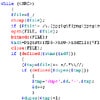
Security technology company Symantec reported Thursday that it has analyzed what it believes to be the first known threat to 64-bit Windows systems, a virus labeled W64.Rugrat.3344.
Symantec said it was not expecting widespread copycats of W64.Rugrat.3344, since the affected assembly code requires fairly advanced technical knowledge. Symantec said W64.Rugrat.3344 was created in IA64 (Intel Architecture) assembly code and infects IA64 executable files, excluding .dll files. The security specialists reported that W64.Rugrat.3344 also infects files that are in the same folder as the virus, as well as all files within related subfolders.
Area 51 hackers dig up trouble

Even without aliens, the facility has its secrets, and last year while roaming the desert outside the Groom Lake base Clark stumbled upon one of them: an electronic device packed in a rugged case and buried in the dirt. Marked "U.S. Government Property," the device turned out to be a wireless transmitter, connected by an underground cable to a sensor buried nearby next to one of the unpaved roads that vein the public land surrounding the base. Together, the units act as a surveillance system, warning someone -- somewhere -- whenever a vehicle drives down that stretch of road.
"We dug up about 30 or 40 of them on various access roads leading to the base on public land," Arnu says, insisting that he and Clark always carefully reburied each unit after logging it, and even tested it with the frequency counter to make sure it was still working before moving on to the next one.
The following week, according to the station's report, FBI and Air Force agents raided Clark's trailer home in Rachel, and carted off his computer, photographs and records. The next day, Arnu got a call at work from the FBI. "They demanded that I speak with them the very same day," he says.
'Pirate Act' raises civil rights concerns

The so-called Pirate Act is raising alarms among copyright lawyers and lobbyists for peer-to-peer firms, who have been eyeing the recording industry's lawsuits against thousands of peer-to-peer users with trepidation. The Justice Department, they say, could be far more ambitious.
Foes of the Pirate Act have been alarmed by the unusual alacrity of the proposal's legislative progress. It was introduced just two months ago, on March 25, and not one hearing was held before the Judiciary committee forwarded it to the full Senate for a vote a month later.
"This was an attempt to move it in a stealthy manner," said Philip Corwin, a lobbyist for Sharman Networks, which operates the Kazaa network. "I can't imagine that (Hollywood lobbyist) Jack Valenti or (RIAA chairman) Mitch Bainwol really wants to come before Congress and give testimony saying, 'We can't afford to bring these lawsuits. That's why we want the taxpayer to pay for them.' I can't believe they want to do that in public."
Net traffic shows file-sharing undented
The threat of legal action and hefty fines has done little to stop internet users around the world trading music and video files, according to a new study of network traffic.
"There's been no decline in the number of people file-sharing," says Chris Colman, European managing director for Sandvine.
The company's research indicates that the proportion of total net traffic used for peer-to-peer sharing has declined only slightly in the US over the last year, from 70 to 65 per cent.
Furthermore, file-sharing in Europe has not dropped at all - it now accounts for 70 to 80 per cent of net traffic. And internet usage in both the US and Europe is still growing, meaning that file-sharing is growing overall.
However, Sandvine's study does reveal that many US file-traders have moved away from the most popular service, Kazaa. File-sharing traffic via Kazaa has dropped from 90 per cent of the total to just 20 per cent. Users in the US have shifted to alternative networks, in particular eDonkey.
The RIAA's Push for an Audio Broadcast Flag

The Recording Industry Association of America has discovered that digital radio broadcasts can be copied and redistributed over the Internet, and so it is pushing the FCC to adopt an audio broadcast flag, which would likely prevent users from sending copyrighted radio programs over the Internet. But it could also hamstring other legitimate uses by preventing a digital radio program from leaving the device on which it was recorded. The FCC has initiated a notice of inquiry (pdf), typically a step leading to formal rule-making. The public may submit comments to the FCC between June 16 and July 16. A lobbyist friend sent me copies of the private correspondence on the subject between RIAA president Cary Sherman and Consumer Electronics Association president Gary Shapiro, and Cryptome just posted them here (pdf) and here (pdf). Yes, they're legit. Mindjack just posted an article I wrote on the subject titled, 'Will Digital Radio Be Napsterized?
Microsoft creating Windows for supercomputers
Microsoft has launched an effort to produce a version of Windows for high-performance computing, a move seen as a direct attack on a Linux stronghold.
High-performance computing once required massive, expensive, exotic machines from companies such as Cray, but the field is being remade by the arrival of clusters of low-end machines. While the trend could be considered an opportunity for Microsoft, which has long been the leading operating-system company, Linux has actually become the favored software used on these clusters.
"The majority of people doing high-performance computing are a lot more comfortable and efficient inside a Unix environment," a category that includes Linux, the SDSC's Papadopoulos said. To convince people to invest the time and money to switch, Microsoft will have to offer something much better, he said.
Dozens of machines in a list of the 500 fastest supercomputers run Linux, including five of the top 10. Only two on the list are identified as Windows machines.