Cities Say No to the Patriot Act

In the past two years, more than 300 cities and four states have passed resolutions calling on Congress to repeal or change parts of the USA Patriot Act that, activists say, violate constitutional rights such as free speech and freedom from unreasonable search and seizure.
Congress passed the USA Patriot Act swiftly in October 2001, 45 days after the Sept. 11 attacks, easing restrictions on the government's ability to dig up personal information about citizens and non-citizens, and obtain wiretaps and search warrants. Only one senator, Russ Feingold (D-Wisconsin), and 61 House of Representative members voted against the legislation.
Under the act, federal investigators can obtain individuals' library, financial, health and education records from cities while barring municipal workers from letting anyone know authorities have seized the documents. Officials can also monitor the activities of people who have not been identified as suspects and search a home or office without prior notice.
Microsoft gives licences away for free
Software firm Microsoft has announced that it is giving away free software licences.
The free licence only applies to computers that remain switched off.
The offer only applies to cold servers that stay switched off until they are needed and are only available if you are signed up to Microsoft's Software Assurance licensing programme.
We wonder if Microsoft's next cunning plan will be to extend its radical free licence program to computers and servers that haven't been built yet.
Pop-up technology improves

According to news.com, Google's tool bar, which was confidently touted as a firewall against pop-ups has been tunnelled under by the ad companies.
Blocking software usually detects an HTML command known as "openwin" for opening a new window. However, a new breed of pop-ups avoid that command. Some advertisers are sending pop-ups through a "user initiated command" triggered when people "mouse over" an object on the page.
Another technique uses JavaScript commands, and gets around pop-up blockers that don't block user initiated commands like Google and Yahoo.
According to researcher Nielsen NetRatings, pop-ups have only become more prevalent after software appeared to kill them. Their number has increased nearly six times since 2002. A number of big publishers use pop up ads.
BT puts block on child porn sites

British Telecom has taken the unprecedented step of blocking all illegal child pornography websites in a crackdown on abuse online. The decision by Britain's largest high-speed internet provider will lead to the first mass censorship of the web attempted in a Western democracy.
Known as Cleanfeed, the project has been developed in consultation with the Home Office and will go live by the end of the month, The Observer can reveal. Other major players in the internet market, such as Energis and Thus, which owns rival Demon Internet, are said to be preparing to block banned sites.
Blocking websites is highly controversial and until now has been associated only with oppressive regimes such as Saudi Arabia and China, which have censored sites associated with dissidents. But many in the field of child protection believe that the explosion of paedophile sites justifies the crackdown.
RIAA wants your fingerprints
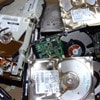
Not content with asking for an arm and a leg from consumers and artists, the music industry now wants your fingerprints, too. The RIAA is hoping that a new breed of music player which requires biometric authentication will put an end to file sharing.
Established biometric vendor Veritouch has teamed up with Swedish design company to produce iVue: a wireless media player that allows content producers to lock down media files with biometric security. This week Veritouch announced that it had demonstrated the device to the RIAA and MPAA.
iVue has been developed in partnership with Swedish design house Thinking Materials. Since Veritouch already supplies security authentication systems up to Homeland Defense standards (in partnership with an Israeli defense contractor), we do forsee exciting synergies ahead, should budget cuts force the War on Terror and the War on Piracy to be consolidated into just the one unwinnable "war".
Michael Moore clips debut on Web

Filmmaker Michael Moore began streaming scenes from his controversial documentary "Fahrenheit 9/11" on the Web on Thursday.
The film takes a critical, highly personal look at events surrounding the terrorist attacks on the World Trade Center and the Pentagon and has become a cause celebre since Moore revealed that Walt Disney had refused to distribute it.
The movie is set to arrive in theaters June 25, but the curious can get an early taste from the trailer. Clips show Moore in fine confrontational style, inviting members of Congress to enlist their children in the Army and send them to Iraq, and driving through Washington reading the text of the Patriot Act over a loudspeaker, for the benefit of lawmakers who didn't read the bill before approving it.
Can-Spam Act Leads To More Spam
Back when President Bush made spam legal, we predicted the floodgates would open and actually increase spam. Now we've got some numbers to back up that prediction. According to anti-spam vendors, spam is on the rise and increasingly complies with the Can-Spam Act now; almost 10% of spam is legal up from 1% in January. And given that 7% of email users actually buy products from unsolicited email (ugh!), spam doesn't seem to be decreasing at all. So there don't appear to be any easy solutions to the spam problem, but if we're going to pass silly laws, maybe we need to pass a law against buying products promoted by spam.
Ebay breaks the spirit of a little boy
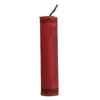
A bugle-breaking Arkansas youngster is having his PS2 cruelly taken away from him and auctioned on the ever-popular eBay.
It all started when the 13 year old decided to cost his parents a fortune: the sassy kid had stolen his Dad's precious beer, broken his mother's bugle and glugged down a 120 dollar bottle of champagne. Ouch.
Never before had eBay made for such effective punishment – the kid's parents being borderline sadistic, if you ask me. The mother, who set up the auction, favours a bright red bold font, and makes a point of telling us how "beloved" the item is.
The system is obviously well used, and comes with two control pads – an official Sony pad and a tricksy third party one too.
How Copyright Law Changed Music
Chuck D of Public Enemy has always been a strong supporter of freeing up music. Years ago, when Napster first appeared on the scene, he was one of the first to publicly stand up in support of Napster, and even went on TV to debate Lars Ulrich from Metallica on the subject. Here's a fascinating interview with Chuck D & Hank Shocklee of Public Enemy, talking about how copyright law forced them to change the style of music they created entirely. They claim that two of their earlier albums would be impossible to create today, but were possible early on when record execs hadn't trained their legal guns on music sampling yet. Now, those same songs, that used many different samples would be impossibly expensive. Chuck D claims that the group had to "change our whole style" between albums in order to take into account new copyright rules. Also, when asked about others taking their music and remixing it themselves, he says: "I think my feelings are obvious. I think it's great."
Microsoft ordered to pay Lindows' court fees

An Amsterdam court has ruled against Microsoft in its attempt to obtain an injunction against Lindows, a maker of Linux software, as the two companies' trademark dispute continues.
The software giant had objected to the appearance of the word "Lindows" on the company's Web site, technical manuals and other places. Microsoft had also asked the court to levy fines of more than $100,000 per day against Lindows.
But Thursday, a judge in the Amsterdam District Court denied Microsoft's request for an injunction and ordered the software giant to pay roughly $1,160 in legal fees related to the litigation.
According to the ruling, Lindows has complied with the terms of the original decision and can continue to use the name on a limited basis, as long as it clearly denotes that it is not affiliated with Microsoft's Windows. The judge said that since the name Lindows is still being used legally outside the Benelux countries, and the use of the name does not provide Lindows with a competitive advantage, there is no infringement.