Hacking Vodka

A group of geeks aimed to find out whether running cheap vodka through a brita water filter would make it drinkable. They claim after several passes through the filter the cheap vodka surpassed the premium Ketel One in drinkability tests. I think they should have done the test 'double blind' although drinking Vladmir Vodka probably could make you go blind anyways... =)
Ballmer: On the Linux Hot Seat (Again)
What, exactly, did Microsoft's CEO say about Linux and patents? Here's the transcript.
Let me talk a little bit about that. First, I think the most important -- if I was to leave you with one sort of top level, most important suggestion, is we recommend to all governments that they not get emotionally involved in preferring either software that comes from commercial companies or open source software.
We do license our source code to governments. Governments can look at that source code, see that source code. We actually think our software is far more secure than open source software. It is more secure because we stand behind it, because we fix it, because you actually know who builds it. Nobody ever knows who builds a piece of open source software, where it comes from, who did it.
Second, for any piece of software, the overall cost of having it, the acquisition costs of the license is generally a very small percentage. You have to buy the software, you've got to install it, you've got to deploy it, you've got to develop for it, you've got to manage it, you've got to create and buy applications from it, and all of those costs are probably about 90 percent of the total cost, the acquisition price is probably about 10 percent of the overall cost.
Ballmer Threatens Linux Patent Lawsuits

"Today Microsoft warned several Asian countries that using Linux could subject them to lawsuits, claiming that Linux violates '228 patents'. Apparently, Steve Ballmer believes he can enforce U.S. law in Asia." Ballmer is presumably speaking about this story. So, companies which sell insurance against lawsuits and companies which make competing products both warn of the dangers of using Linux. Maybe someone should point out that Microsoft is battling dozens of patent-infringement lawsuits itself, and any user of Microsoft software (including governments) could also be sued?
Should Canada Indict Bush?
When U.S. President George W. Bush arrives in Ottawa — probably later this year — should he be welcomed? Or should he be charged with war crimes?
The mistreatment of prisoners at Iraq's Abu Ghraib prison is a clear contravention of the Geneva Accord. The U.S. is also deporting selected prisoners to camps outside of Iraq (another contravention). U.S. press reports also talk of shadowy prisons in Jordan run by the CIA, where suspects are routinely tortured. And the estimated civilian death toll of 100,000 may well contravene the Geneva Accords prohibition against the use of excessive force.
Then there is Guantanamo Bay. The U.S. says detainees there do not fall under the Geneva accords. That's an old argument.
In 1946, Japanese defendants explained their mistreatment of prisoners of war by noting that their country had never signed any of the Geneva Conventions. The Japanese were convicted anyway.
But a Canadian war crimes charge, too, would face many hurdles. Bush was furious last year when Belgians launched a war crimes suit in their country against him — so furious that Belgium not only backed down under U.S. threats but changed its law to prevent further recurrences.
MPAA wants parents, teachers to rat on kids
Conservatives often accuse Hollywood of failing to pay heed to 'family values', but the Motion Picture Ass. of America's latest initiative is designed to split families right down the middle. The MPAA hopes that new software will encourage parents to turn their children over to the authorities as file-sharing felons.
The software, designed to identify potentially infringing material on the home PC, is part of the MPAA's war on file sharing and will be released for free by the MPAA at a later date. As expected, the MPAA filed its first John Doe suits against file sharers today.
But by hoping that anxious parents will install the software themselves, thus giving consent, the MPAA can get round its most pressing problem: that it doesn't really know who the infringers are. In every home, the MPAA hopes, is an informer: an anxious parent.
How scammers run rings round eBay
Everyone knows that buying and selling on eBay is precarious. Even eBay admits this and gives basic advice on its site that it believes helps eliminate most fraud.
Buyers and sellers agree not to go through the more secure PayPal system because it costs more to do so. So buyers take the risk of sending the money to the seller who either doesn't send the goods or sends shoddy or fake goods. The sellers protect themselves against prosecution by claiming loss, or disputing the buyer's version of events. The amounts involved - though not insignificant to the buyer - are too small for eBay to want to take the matter further.
There is one other common factor in all these stories. Though the buyers report the matter to eBay they are invariably frustrated at standard email responses and being steered towards a mediation system which costs the buyer £15 and even then may or may not lead to resolution. Alternatively, sellers can claim compensation through eBay and may get a maximum of £105 - if they claim between 30 and 90 days after the event and meet the criteria for payment.
Sun stares down Red Hat with Solaris 10
That appears to be the flag Sun Microsystems will be waving today as it officially unveils Solaris 10 (even though the OS won't actually ship until January). Sun is eliminating the fee customers have paid in the past to run Solaris x86 on Intel or AMD servers in a bid to make its software model more like that of Red Hat. In so doing, the Unix server maker hopes to regain ground lost as customers flocked to Linux boxes in the post-bubble era.
Sun manages to garner a lot of attention for new versions of Solaris and is hoping that some of those folks that went with Linux will be tempted to give Solaris another try. This mid-tier pricing model gives Intel and AMD server customers a chance to test Solaris for free.
Airlines Ordered to Expose Data
Homeland security officials accidentally revealed on Friday that the Transportation Security Administration will soon officially order America's airlines to turn over a month of passenger data to test a new passenger screening system.
The TSA announced in late September its intention to order all 72 domestic airlines to turn over the passenger records -- which can include credit card numbers, phone numbers, addresses and health conditions -- in order to stress-test a centralized passenger screening system called "Secure Flight."
"Our concern is understandable: Airlines cannot be subject to the potentially conflicting demands of TSA's Secure Flight test program and European (or other nations') data protection requirements," wrote ATA Deputy General Counsel James L. Casey.
"TSA is aware of, and sensitive to, the need to preserve Americans' freedom while pursuing better security," the agency wrote.
How to smash a home computer
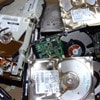
An executive who froze his broken hard disk thinking it would be fixed has topped a list of the weirdest computer mishaps.
Careless - and preventable - mistakes that result in data loss range from reckless file maintenance practices to episodes of pure rage towards a computer.
"Data can disappear as a result of natural disaster, system fault or computer virus, but human error, including 'computer rage', seems to be a growing problem," said Adrian Palmer, managing director of Ontrack Data Recovery.
"However, individuals and companies can avoid the hassle and stress this can cause by backing up data on a regular basis."
Man bites dog (and a policeman)
Police say an officer and his dog were bitten by a man resisting arrest in Kansas City.
Officer David Magruder tried to arrest the man, suspected of dodging a cab fare, early on Friday morning.
The man began to punch Mr Magruder, who then released police dog "Soty" from the patrol vehicle using a remote control, a local newspaper reported.
Soty bit the man, who then bit back, according to police, nearly taking off the dog's ear. He also bit Mr Magruder.
The dog's ear had to be stitched back on by a vet, but he has lost a small piece, according to the Kansas City Star newspaper, which carried the story.