Maximum pain is aim of new US weapon

The US military is funding development of a weapon that delivers a bout of excruciating pain from up to 2 kilometres away. Intended for use against rioters, it is meant to leave victims unharmed. But pain researchers are furious that work aimed at controlling pain has been used to develop a weapon. And they fear that the technology will be used for torture.
"I am deeply concerned about the ethical aspects of this research," says Andrew Rice, a consultant in pain medicine at Chelsea and Westminster Hospital in London, UK. "Even if the use of temporary severe pain can be justified as a restraining measure, which I do not believe it can, the long-term physical and psychological effects are unknown."
The research came to light in documents unearthed by the Sunshine Project, an organisation based in Texas and in Hamburg, Germany, that exposes biological weapons research. The papers were released under the US's Freedom of Information Act.
The contract, heavily censored before release, asks researchers to look for "optimal pulse parameters to evoke peak nociceptor activation" - in other words, cause the maximum pain possible.
Microsoft: Activation shift won't be a pain
Microsoft's plan to halt some Net activation for Windows kicked in Monday, with the software maker assuring customers that the antipiracy measure will not prove a problem for legitimate users.
As reported earlier, the updated program calls for the top 20 PC makers to activate Windows XP on every system before it ships. If a customer has to reinstall the operating system, as long as they use the restore disks from the original equipment manufacturer (OEM), activation will be automatic, said Keith Beeman, director of worldwide license compliance for Microsoft.
The company has a plan to check that people's operating systems are properly licensed before allowing them to download certain updates. The plan, known as the Windows Genuine Advantage initiative, was introduced in January.
Invisibility Shields Planned by Engineers

In popular science fiction, the power of invisibility is readily apparent. Star Trek fans, for example, know that the devious Romulans could make their spaceships suddenly disappear.
Electronic engineers at the University of Pennsylvania in Philadelphia are researching a device they say could make objects "nearly invisible to an observer." The contrivance works by preventing light from bouncing off the surface of an object, causing the object to appear so small it all but disappears.
The concept is based on a "plasmonic cover," which is a means to prevent light from scattering. (It is light bouncing off an object that makes it visible to an observer).
John Pendry, the Imperial College physicist, said that light-shielding covers would have to be customized to match the properties of each and every object they hide.
Music download prices to rise

The market for downloaded music is strong enough to take a price rise, according to the major music labels.
Several big labels are in talks with online music retailers to get them to increase prices,according to the FT. The labels are looking to increase the wholesale prices shops pay for tracks. Sites in the US typically sell tracks for 99 cents each. The wholesale price is currently 65 cents per track, according to the FT.
Universal and Sony BMG are less keen to put prices up. EMI and Time Warner refused to comment on the FT story. Some observers are concerned that increasing prices would push people back to peer-to-peer networks and dodgy copies of songs.
Firm eyes RSS feeds as ad vehicle

Kanoodle, a search-advertising specialist, wants to help turn blogging into small business.
On Monday, the company is expected to introduce a self-service system that lets online publishers pair advertising with their RSS feeds. Called BrightAds RSS (after the technology format Really Simple Syndication), the service takes advantage of Kanoodle's keyword advertising system to match Web content to relevant ads. Once a publisher signs up, an advertising link will piggyback on its syndicated feed sent to third-party news readers.
New York-based Kanoodle and Moreover, based in San Francisco, have been testing RSS advertising for more than six months, and according to Pitkow, the tests have been profitable.
Startup uses tiny probes to store data
A small Fremont-based startup called Nanochip Inc. has developed prototype arrays of atomic-force probes, tiny instruments used to read and write information at the molecular level. These arrays can record up to one trillion bits of data -- known as a terabit -- in a single square inch. That's the storage density that magnetic hard disk drive makers hope to achieve by 2010. It's roughly equivalent to putting the contents of 25 DVDs on a chip the size of a postage stamp.
If successful, Nanochip's technology could take the $7 billion flash memory market -- which may begin to bump up against its miniaturization limits by the close of this decade -- in an entirely new direction.
Nanochip has a joint development agreement with Ovonix, a Michigan-based company that invented phase-change media, the type of thin film used on a CD or DVD read-write disc. The material has shown durability in other uses, Mr. Knight notes, citing an Intel Corp. report that the film can withstand more than one trillion "write" and "read" cycles.
Count Every Vote Act of 2005

Senators Hillary Rodham Clinton (D-NY) and Barbara Boxer (D-CA) today unveiled comprehensive voting reform legislation to make sure that every American is able to vote and every vote is counted. Senators Clinton and Boxer announced the legislation today in a press conference joined by Representative Stephanie Tubbs Jones (D-OH), who will sponsor the legislation in the House of Representatives, and voting rights advocates.
The Count Every Vote Act of 2005 will provide a voter verified paper ballot for every vote cast in electronic voting machines and ensures access to voter verification for all citizens, including language minority voters, illiterate voters and voters with disabilities. The bill mandates that this ballot be the official ballot for purposes of a recount.
To encourage more citizens to exercise their right to vote, the Count Every Vote Act designates Election Day a federal holiday and requires early voting in each state. The bill also enacts "no-excuse" absentee balloting, enacts fair and uniform voter registration and identification, and requires states to allow citizens to register to vote on Election Day.
In particular, the bill restricts the ability of chief state election officials as well as owners and senior managers of voting machine manufacturers to engage in certain kinds of political activity.
Loki puts donations toward $1m MPAA payoff

When the MPAA filed a round of lawsuits at BitTorrent sites, LokiTorrent stood up as a proud defender of P2P technology. It promised to battle the MPAA to the death in court and asked for financial aid from file-traders to make this legal fight possible. Loyal traders tossed more than $40,000 to Edward Webber's crew, hoping to give P2P technology another day in court.
The courts won't have a crack at answering these questions because LokiTorrent gave in to the major movie studious.
The settlement bars Webber from running any P2P sites that may violate any MPAA copyrights. He, however, has vowed to keep making "fun and useful" sites.
DRM for 1'3

In the latest entry in the battle over Digital Rights Management, a fellow has blatantly ripped off a "tune" from the iTunes Store. "Tune" is 1 minute 3 seconds of silence. To compound his crime, he has posted the tune on his web site for anyone to download. I downloaded it to iTunes, and it played just fine (but now I suppose I'm a criminal, too). I wonder what John Cage and Mike Batt would have to say about this? Will lawyers for Apple or Ciccone Youth send a C&D letter? If I were to make my own MP3 silent tune of exactly the same length and put it online, would I be infringing their copyright?
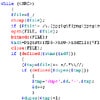
#!/usr/bin/perl -w
open (WAV, ">silence.wav");
print WAV pack("H*", "524946461493A90057415645666D7420");
print WAV pack("H*", "100000000100020044AC000010B10200");
print WAV pack("H*", "0400100064617461F092A90000000000");
print WAV "\x00" x 11113196;
close (WAV);
Adware maker gets job with Homeland Security
Purveyor of adware, Claria is going to give advice to the Department of Homeland Security on privacy matters.
According to CNET, Claria, formally called Gator, is to sit on a 20 person committee which will look at how Homeland Security does its job while protecting the privacy of US citizens.
The company knows a lot about privacy. Users branded it parasitical because its pop-up ad software was installed without adequate permission and hard to delete.
Catalogue retailer L.L. Bean sued Gator for alleged trademark infringement. In February 2003, Gator settled a case brought against it by The Washington Post, The New York Times, Dow Jones and other media companies. It was also at the centre of several German court injunctions.