A license to eBay? Maybe in Ohio

A new Ohio law that will take effect in May will have the unintended consequence of requring residents of that state to get auctioneer licenses and be bonded in order to sell items on eBay. In order to obtain an auctioneer license, Ohioans will need to pay a US$200 license fee and post a US$50,000 bond. Along with the out-of-pocket costs, sellers will have to attend an approved auction school, undergo a one-year apprenticeship to a licensed auctioneer, and pass both oral and written exams.
The question of government regulation of eBay sellers is an interesting one. A number of Power Sellers manage to make a nice living purely through eBay, which offers group health insurance and other benefits to that group. From an end-user point-of-view, it often appears as though oversight by eBay is somewhat lacking. The feedback system is an imperfect one, often functioning as an exercise mutual back-scratching. Furthermore, getting eBay to take action against shady sellers can turn into an exercise in frustration with little apparent result, a topic that has been a frequent topic of discussion at a coin forum I frequent.
Microsoft Windows LAND Attack Denial of Service
The vulnerability is caused due to improper handling of IP packets with the same destination and source IP and the SYN flag set. This causes a system to consume all available CPU resources for a certain period of time.
This kind of attack was first reported in 1997 and became known as LAND attacks.
Microsoft Windows XP with SP2 and Microsoft Windows 2003 have been reported vulnerable.
Forged Maxtor HDDs turn up in Japan
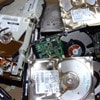
Fake 320GB Maxtor hard drives have surfaced in Japanese retail channels, the storage company confirmed this weekend.
According to the site, Maxtor has confirmed the purchased drive is a forgery. While some such products are actually legitimately-made units that have failed to pass QA tests and have been appropriated before they are due to be destroyed, Maxtor said that the MaXLine II forgeries were not made in any of its factories.
Indications that the purchased drive might not have been the Real McCoy included an incorrect font on the label and the use of a lower-case 'X' in the drive's family name. The drive also gives BIOS information inconsistent with its external branding and model number.
Microsoft Sues KSU Student

"A student at Kent State University sold a copy of two Microsoft software packages on eBay. He was then sued in federal court by Microsoft, who threw four lawyers at the case, making a number of claims and allegations. The student is representing himself and appears to be winning his case. Microsoft now wants to back out of the lawsuit, but the student won't let them out." The story linked there is fairly brief. A much more in-depth story includes all the gory details, but is BugMeNot required. The basic story is that he bought these two pieces of software legally, and was then sued for selling them on eBay. He spent time researching the legal claims, realized they were baseless and has countersued Microsoft. It's good to see someone not bullied and pushed aside once the high-priced lawyers come calling.
Bill Holds Game Makers Liable for Violence
A bill under consideration in Washington state would hold videogame developers accountable for violent acts ostensibly inspired by a particular game.
Currently under review by the state legislature, House Bill 2178 would hold game retailers and manufacturers accountable for "injury or wrongful death" committed by a person under age 17, if the game "was a factor in creating conditions that assisted or encouraged" the perpetrator.
While the bill is still in committee stage and far from becoming law, its dramatic interpretation of criminal responsibility reflects growing concern and controversy about the effects of violent video games.
Protection management, copy control

This week, in Dublin, the Digital Video Broadcasting Project held its annual meeting to discuss progress on its latest set of specifications for digital television. Much of its work has to do with technical details such as codecs and data formats, but a key section called Content Protection/Copy Management (CPCM) is about controlling how high-definition digital broadcasts may be recorded, copied, or redistributed.
It was a week of culture clashes. My favorite was when one of the Disney people asked two Flemish public TV broadcasters whether having their content redistributed online wasn't a problem for them. Most surreal was the man from the MPAA talking about "social justice" with respect to pay TV subscriptions.
CPCM is intended to create a trusted system analogous to Microsoft's trusted computing platform – now known as Next Generation Secure Computing Base. Commercial content is acquired from a broadcast, data stream, or shrink-wrapped medium. It comes wrapped in metadata known as USI (for Usage State Information) that specifies how the content may be used: for example, how many times it might be viewed, how long it can be kept available, whether it can be copied, how it may be output, and so on.
Parody band forced offline by Sony
They combine the classic melodies of the Beatles with the heavy-metal thunder of Metallica, but the rock band Beatallica certainly isn't music to Sony's ears.
Sony's publishing arm, which owns the rights to the Beatles catalogue, has ordered the Milwaukee band to take down its Web site and pay unspecified damages for recording songs like "Leper Madonna" and "Got to Get You Trapped Under Ice".
But on February 24, Beatallica received a letter from Sony/ATV Music Publishing demanding that the band take down its Web site and pay Sony "an amount to be discussed."
Utah governor weighs antiporn proposal
The Utah governor is deciding whether to sign a bill that would require Internet providers to block Web sites deemed pornographic and that could also target e-mail providers and search engines.
Late Wednesday night, the Utah Senate approved controversial legislation that would create an official list of Web sites with publicly available material found to be "harmful to minors." Internet providers in Utah must offer their customers a way to disable access to sites on the list or face felony charges.
A letter that NetCoalition sent to the state Senate earlier this week said the wording is so vague it could affect search engines, e-mail providers and Web hosting companies. "A search engine that links to a Web site in Utah might be required...to 'properly rate' the Web site," the letter said.
Labels seek to block Altnet revenue-share

Record labels have asked an Australian court to block peer-to-peer company Altnet's ad-revenue-sharing program.
Altnet said earlier this week that it would share advertising dollars from Kazaa parent Sharman Networks with any record labels that agreed to sell music through its peer-to-peer networks. Record labels, which are suing Sharman Networks in Australia, are now asking a judge to block distribution of those advertising revenues.
Censor Services Push Forward

Legislation that would allow people to automatically skip over objectionable content in movies viewed at home sailed through a key House subcommittee on Thursday and looks to be on the fast track.
The House Judiciary Committee's Subcommittee on Courts, the Internet and Intellectual Property passed S167/HR357, known as the Family Entertainment and Copyright Act of 2005, with little debate. The full Senate passed its identical bill on a voice vote on Feb. 1.
The legislation would essentially affirm the legality of software such as ClearPlay, which automatically edits supposedly objectionable scenes out of popular movie titles. Several DVD players now come ClearPlay-enabled and work with more than 1,000 movie titles.
"Just as the author of a book should not be able to force someone to read that book in any particular manner or order, a studio or director should not be able to force parents or their children to watch a movie in a particular way," said bill sponsor and subcommittee chairman Lamar Smith (R-Texas).