Vulnerabilities in WhatsApp Web affect 200 million users globally

Check Point security researcher Kasif Dekel found that to exploit the vulnerability, an attacker simply needs to send a WhatsApp user a seemingly innocent vCard contact card, containing malicious code. Once opened in WhatsApp Web, the executable file in the contact card can run, further compromising computers by distributing malware including ransomware, bots, remote access tools (RATs), and other types of malicious code.
Files on Seagate wireless disks can be poisoned, purloined – thanks to hidden login
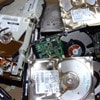
CERT.org has reported Seagate wireless hard drives include “undocumented Telnet services” accessible with a hard-coded password. This allows “unrestricted file download capability to anonymous attackers with wireless access to the device.”
The three flaws present in the device mean that anyone on your network – or who can reach it from the outside – armed with the default password of "root" and enough savvy to try the username “root” can download the entire contents of the Seagate devices, then upload malware into them.
Authorities investigating if wanted son of “El Chapo” Guzmán, world’s most wanted drug lord, is in Costa Rica

Jesús Alfredo Guzmán Salazar, 29, who is also wanted by the US Drug Enforcement Administration (DEA), posted a tweet to the social networking site, Twitter on Monday that may have inadvertently revealed his presence in Costa Rica. The social networking app, when used from a smartphone, pins a user’s location to each tweet, unless the feature is turned off.
In a dark corner of the Trans-Pacific Partnership lurks some pretty nasty copyright law
Any provision of U.S. law that eliminated “pre-established damage” or “additional damages” for any class of works could be a violation of various TPP provisions requiring that such damages be made available, and it even appears that distribution of orphan works would have to subject the distributor to criminal copyright liability.
These (and other — poke around at the KEI site for more evidence) copyright provisions in the TPP are pretty dreadful and continue the disturbing trend of making copyright bigger, longer and stronger just when public policy demands the opposite.
FTC gives FBI the finger over govt backdoor encryption demands

Following a blog post last month by the regulator's CTO in which he outlined why he was glad to have strong firmware encryption after his laptop was stolen, today FTC Commissioner Terrell McSweeny has also outlined why encryption is a good thing – and carefully suggests that introducing a way to undermine it may not be such a great idea.
"Encryption and end-user protections can raise issues of access for law enforcement," McSweeney notes. "Some argue that data storage and communications systems should be designed with exceptional access – or 'back doors' – for law enforcement in order to avoid harming legitimate investigative capabilities. However, many technologists contend that exceptional access systems are likely to introduce security flaws and vulnerabilities, weakening the security of products."
Hackers could use baby monitors to watch your kids too
Experts said the flaws are one more example of the lack of security in the realm of gadgets that can communicate with the Internet, a trend known as the "Internet of Things." Whether it's a smart thermostat or a connected refrigerator, the devices are landing on store shelves without standardized security controls, potentially putting customers at risk, experts say.
Jimmy Kimmel says gamers want him to get AIDS and die
He described watching gamers game as being akin to going to a restaurant and having someone eat your food for you. This, however, was manna to the many, many sensitive gamers in the world.
A sightly perplexed Kimmel took to his show on Monday night to muse about this section of humanity. He offered a selection of messages he'd received.
The simple, to-the-nasty-point "Get cancer," for example. Another wished him brain cancer. Yet another said he hoped Kimmel would get AIDS.
Could diesel made from air help tackle climate change?
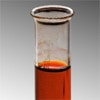
The chemistry to make fuel from CO2 isn't especially hard - split water into hydrogen and oxygen through electrolysis, add the hydrogen to CO2 to make carbon monoxide and water, then bung in more hydrogen to build up hydrocarbon chains.
But a lot depends on government policy. The actual price of the fuel can be as low as 30% of what we pay at the pump - the rest of the cost is made up of fuel duty, VAT, and the retailer's profit margin.
But it's the cost of electricity that could make or break e-diesel's commercial viability, because the process requires a lot of energy.
65 per cent of Europe’s electronic waste is stolen or mismanaged
Something stinks about Europe’s trash. A two-year investigation into Europe’s electronic waste found that most of it is stolen, mismanaged, illegally traded, or just plain thrown away.
Criminals absconded out of Europe with 1.3 million tonnes of undocumented equipment, such as laptops, circuit boards, or refrigerators. The loss of functional components or the precious metals inside cost the European Union up to 1.7 billion euros each year, say the researchers.
How Apache Spark Is Transforming Big Data Processing, Development
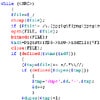
Apache Spark is an open source data processing engine built for speed, ease of use and sophisticated analytics. Spark is designed to perform both batch processing and new workloads like streaming, interactive queries, and machine learning.
“One of the things is it improved on what was out there in two dimensions at the same time," he said. “So it was both a lot faster—like 10 to 100 times faster—and a lot quicker to program with and easier to use. So you could write 10 times less code. It’s very uncommon that you have something that’s better in both dimensions," he said.