The DMCA's unintended consequences

The Electronic Frontier Foundation (EFF) has released version 4 of their "Unintended Consequences" document, which details problematic side effects arising out of the oft-maligned Digital Millennium Copyright Act (DMCA). Much of the criticism is targeted specifically at section 1201 of the act, which is targeted at circumvention of copyright protection systems.
Finally, a number of respected foreign engineers and scientists boycotted trips to the US, citing the possibility of their own work drawing fire under the DMCA. In response, some conferences traditionally held on American soil were relocated to sites outside of the US to allay concerns.
It must be pointed out that the 15-page document covers far more than the Sklyarov case. Among other things, the DMCA has been invoked to censor publication of information, prevent fair use (PDF) of copyrighted material, stifle competition to the detriment of consumers, stop Sony's Aibo robot dog from dancing, and end RealNetworks' iPod compatibility.
Alleged Brit hacker awaits extradition verdict

Alleged hacker Gary McKinnon appeared in front of the beak at Bow Street Magistrates Court yesterday morning hoping to avoid being sent to Guantanamo Bay.
The forty year-old is accused of hacking into American military computers from his home in London using his Windows-powered PC. The US government claims he caused £370,000-worth of damage to 97 computers in a year-long hacking spree.
McKinnon claimed he was only trying to get at whatever information the US defence establishment has about UFOs. The US military claims he's a terrorist.
The US Embassy in London sent the court a little note yesterday promising that McKinnon wouldn't be tried by Military tribunal and won't therefore end up hooded and battered in the infamous no-man's land in Cuba. The note was unsigned and, according to McKinnon "not worth the paper it's written on."
Aero To Be Unavailable To Pirates
"Users thinking of pirating the next version of Windows may have a surprise in store: no Aero for you. The upcoming Microsoft OS will run a check to ensure the copy was legally purchased. If it comes up short, the shiniest part of the OS will not be available." From the article: "At first an optional program, the piracy check eventually became mandatory for many types of Windows XP downloads, but was not required to run any aspect of the operating system itself. Microsoft has identified reducing piracy as a key way for the company to grow its sales of Windows, which is already used on more than 90 percent of personal computers. But it's not just pirates who will be blocked from Windows' fanciest graphics. The Aero display also won't be available to those who buy Windows Vista Basic, the low-end consumer version of the operating system."
Goodmail: CertifiedEmail will not reduce spam

Legislators and advocacy groups were surprised at a California Senate committee hearing last week when Goodmail CEO Richard Gingras said its fee-based CertifiedEmail program that AOL and Yahoo are implementing is not meant to reduce spam.
"That's what I thought was the selling point: that it was going to reduce spam and phishing," said state Sen. Dean Florez, a Democrat who chairs the state Senate Select Committee on E-Commerce, Wireless Technology and Consumer Driven Programming.
Rather than helping to reduce spam Gingras claimed that the point is to allow users to verify who important messages are really from, like a message from your bank or credit card company.
Chinese PC makers told to install legal OS
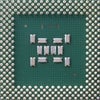
The Chinese government is calling on computer manufacturers to make sure their machines include a legal operating system before they leave the factory.
The notice says all computers made within China's borders should include a pre-installed operating system. This mirrors comments from Microsoft, which has long criticised sales of "naked PCs" as helping pirates.
A separate announcement calls on government departments to make sure their computers are legal.
Porn star's offer to Bin Laden
Italy's most famous porn star Cicciolina has offered herself to Osama Bin Laden.
The 55-year-old actress said it was about time somebody tackled the terrorist and claimed she could be just the woman for the job.
"I am ready to make a deal, he can have me in exchange for an end to his tyranny. My breasts have only ever helped people while Bin Laden has killed thousands of innocent victims."
The blonde porn star, whose real name is Anna Ilona Staller, pointed out that Bin Laden could learn from Saddam Hussein's mistakes.
Are illegal downloads on the way out?

When not producing reports about the state of software piracy in China, the Business Software Alliance (BSA) produces reports about the state of software piracy among children. Their newest report is interesting because it claims that children (ages 8 to 18) are now downloading significantly less music, movies, and software than they were only two years ago.
As with many BSA statistics, it's not clear that these are truly representative of the total situation. A recent report from research firm Big Champagne, for instance, found that P2P usage has doubled in the last two years, not declined. As even the BSA admits, as kids grow older, they download much more material.
If you'd like to see what your kids might be receiving, you can check out Garret's copyright adventures in this brief comic that shows kids just how "uncool" copyright violations are.
Tomb Raider delayed in US because of breasts
The US launch of Tomb Raider: Legend has been delayed because a couple of scenes accidentally had a pair of breasts in the background.
We all know that next to Saudi Arabia, America has a terrible fear of breasts, despite the fact that half of the population have got them and the other half would like a pair to play with. But to avoid a repeat of the Nipplegate crisis that gripped America, the game's release has been delayed.
Apparently the game contains a chapter set in Tokyo, where several women are dancing in the distance. The animators had initially modeled all the women naked, so they could simply drape different dresses around them later. For the sake of completeness they gave them nipples, as you do.
Once the graphics were meshed over all was well and the game could be launched. However what the designers hadn't realised is that some people have special software that can remove meshes to see what is behind them.
Whistle-Blower Outs NSA Spy Room
AT&T provided National Security Agency eavesdroppers with full access to its customers' phone calls, and shunted its customers' internet traffic to data-mining equipment installed in a secret room in its San Francisco switching center, according to a former AT&T worker cooperating in the Electronic Frontier Foundation's lawsuit against the company.
According to a statement released by Klein's attorney, an NSA agent showed up at the San Francisco switching center in 2002 to interview a management-level technician for a special job. In January 2003, Klein observed a new room being built adjacent to the room housing AT&T's #4ESS switching equipment, which is responsible for routing long distance and international calls.
Klein's job eventually included connecting internet circuits to a splitting cabinet that led to the secret room. During the course of that work, he learned from a co-worker that similar cabinets were being installed in other cities, including Seattle, San Jose, Los Angeles and San Diego.
The secret room also included data-mining equipment called a Narus STA 6400, "known to be used particularly by government intelligence agencies because of its ability to sift through large amounts of data looking for preprogrammed targets," according to Klein's statement.
Sony Attacks Critical Review Of Movie
Most people can tell that Hollywood puts out a lot of junk every year, and one wonders whether the studios realize it as well. Apparently, they do know when something is bad, and they try to limit reviewers' access to bad movies. They're probably anxious to avoid another Gigli moment, with reviewers trying to outdo each other in who can be the meanest. When one reviewer slipped through the cracks and caught a screening of the upcoming Rob Schneider vehicle The Benchwarmers, Sony marketing went on the attack. According to the reviewer, the studio called papers where his write-up might have run, called him a liar and said he scammed his way into the screening. They even tried to trick the papers, telling them they'd have to pay extra to run the review, even though they subscribe to the wire service where it was posted. Of course, none of this addresses the review itself, or in anyway casts doubt onto the reviewers ojectivity. This isn't the first time that Sony's had controversy with film reviewers. A few years ago they were discovered to have made up fake quotes from a reviewer that didn't exist (oddly, for another Rob Schneider film). What's weird is if they know the movie is bad, why they bothered distributing it in the first place. Maybe they don't want to miss the next Snakes On A Plane.