Apple Forces Rumors Site To Shut Down

For a few years now, there's been a legal battle going on between Apple and Think Secret, a very popular Apple rumors site for publishing certain rumors. The lawsuit had many people up in arms, as they pointed out that Think Secret should be protected in the same way a newspaper is protected (and noting that Apple would never sue the WSJ the way it sued Think Secret).
While the case has dragged on, unfortunately, Apple won some of the legal battles.
The guy behind Think Secret notes that he never gave up the source, and calls this settlement amicable -- but it sets a horrible precedent for plenty of sites, and may create quite the chilling effect on reporters and bloggers alike.
TorrentSpy hands Hollywood victory
The Motion Picture Industry Ass of America has won an unexpected victory after a Los Angeles Court terminated a copyright lawsuit against TorrentSpy in its favour.
The Dutch-based site bills itself as the largest BitTorrent search engine.
"The court finds that plaintiffs have suffered prejudice, to the extent that a rightful decision is not possible," Judge Florence-Marie Cooper concluded, citing false statements and "widespread and systematic efforts to destroy evidence".
TorrentSpy's San Francisco-based lawyer Ira Rothken denied it had destroyed evidence, but said it did so to protect users.
TorrentSpy now faces a financial penalty, the size of which has yet to be determined.
Voting Machines For Major Counties Decertified

Colorado's top election official decertified electronic voting machines used in some of the state's largest counties on Monday, including Denver, Arapahoe and Jefferson.
Coffman said the system had a 1 percent error rate when counting ballots. "So for every 100 ballots we tested, we found there was an error with one of those ballots," Coffman said.
He said at the time that the four electronic voting systems used in all 64 Colorado counties would have to apply for recertification. The four systems are manufactured by Hart InterCivic, Premier Election Solutions -- formerly known as Diebold Election Systems -- Sequoia Voting Systems and Election Systems and Software.
Agent orange attacks the mitochondria
Researchers with the University of Pennsylvania School of Veterinary Medicine have demonstrated the process by which the cancer-causing chemical dioxin attacks the cellular machinery, disrupts normal cellular function and ultimately promotes tumor progression.
The team identified for the first time that mitochondria, the cellular sub-units that convert oxygen and nutrients into cellular fuel, are the target of tetrachlorodibenzodioxin, or TCDD. The study showed that TCDD induces mitochondria-to-nucleus stress signaling, which in turn induces the expression of cell nucleus genes associated with tumor promotion and metastasis.
TCDD is the most toxic compound in the dioxin family. Formed as a by-product during waste incineration, paper, chemical and pesticide manufacturing, it was the toxic ingredient in Agent Orange and closed the Love Canal in Niagara Falls. The public health impact of dioxin, according to the Environmental Protection Agency, compares to that of the pesticide DDT.
US military propaganda team busted

The activities uncovered by Wikileaks include deleting Guantanamo detainees' ID numbers from Wikipedia, posting of self-praising comments on news websites in response to negative articles, promoting pro-Guantanamo stories on the Internet news focus website Digg, and even altering Wikipedia's entry on Cuban President Fidel Castro to describe him as "an admitted transexual" [sic].
"The military's efforts to alter the record by vandalizing Wikipedia are of a piece with the amateurism of their other public relations efforts: [such as] their ridiculous claims that released detainees who criticize the United States in the media have 'returned to the battlefield'."
Bot sweet-talks personal data out of chatters
As if there needed to be another reason to be wary of chat rooms geared toward meeting people and having flirtatious, cyber-relations with them, doing so can now put you at increased risk of identity theft. CyberLover.ru, a new site out of Russia, boasts that buyers of its software will be able to trick unsuspecting marks into handing over their personal information.
The bot is able to simulate a number of different personalities, ranging from "romantic lover" to—this is not a joke—"sexual predator".
"The program can find no more information than the user is prepared to provide," an employee identified as Alexander told Reuters. "If you have someone who is ready to hand over secret information to the person they are chatting to after having known them for all of five minutes, then in that case a leak of information is possible."
KDE 4 Uses 40% Less Memory Than 3
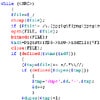
Pro-Linux reports that KDE 4, scheduled to be released in January 2008, consumes almost 40% less memory than KDE 3.5, despite the fact that version 4 of the Free and Open Source desktop system includes a composited window manager and a revamped menu and applet interface. KDE developer Will Stephenson showcased KDE 4's 3D eye-candy on a 256Mb laptop with 1Ghz CPU and run-of-the-mill integrated graphics, pointing out that mini-optimizations haven't even yet been started.
Light Source Lasts 12 Years - No Electricity

The material, dubbed "Litrosphere," can cover a standard sheet of paper for a cost of about 35 cents, and comes in a variety of colors. It's also flexible, and can take the form of either paint or injection-molded plastic. The material is not affected by the heat or cold, can withstand 5,000 pounds, and stays on constantly.
According to the company's patent, the material is based on betavoltaics and uses the radioactive gas tritium as the power source. The beta particles from the tritium radiation can be safely contained by phosphor-coated microspheres. Tritium has a half-life of about 12 years.
"This has potential to save billions in energy costs world-wide," said Steve Stark, MPK engineer. "Litroenergy surpasses all known available lighting options for cost/durability/reliability and safety."
MS Giving Away Vista Ultimate, With a Catch
In case you haven't heard, Microsoft is giving away copies of Windows Vista Ultimate (32-bit or 64-bit DVD), Microsoft Office Ultimate 2007, Microsoft Money Plus Premium, Microsoft Student with Encarta Premium 2008, or Microsoft Streets and Trips 2008 — you can choose any one. The caveat is that you have to let them monitor your use of the program.
UK.gov loses driver ID data
Unencrypted computer discs containing the names and addresses of 6,000 Northern Ireland motorists has gone missing in the post.
News of the data loss at the DVLA comes shortly after the far larger Child Benefit data leak at HM Revenue & Customs that's left the government hunting for discs containing data of 25m people. The latest incident provides evidence that using CDs to distribute unencrypted data about citizens was, if not standard government practice, then a common insecure method used across multiple government agencies.
In the latest such incident, Leeds Building Society warned its workforce of 1,000 that it had mislaid copies of their personal details during the process of moving its HR department during a building refurbishment project, the Press Association reports.