Official HD DVD obituary a matter of days

On Friday, rumor spread fast that Toshiba was about to bail on HD DVD, following a string of unhappy news for the HD DVD camp, beginning with Netflix and Best Buy's decisions to throw their weight behind Blu-ray earlier in the week.
The loss of Warner Brothers demoralized the HD DVD camp, and when it was clear that deep price cuts weren't going to give HD DVD a second wind, the writing was on the wall.
Toshiba and its partners are concerned to show that they have plans that can minimize the financial damage resulting from the shutdown, presumably to keep shareholders happy. But the damaging announcements from Best Buy, Netflix and Wal-Mart have forced an acceleration of the company's plans.
BitTorrent Developers Introduce Encryption

Several BitTorrent developers have joined forces to propose a new protocol extension with the ability to bypass the BitTorrent interfering techniques used by Comcast and other ISPs.
When the first ISPs started to throttle BitTorrent traffic most BitTorrent clients introduced a countermeasure, namely, protocol header encryption.
Unfortunately, protocol header encryption doesn’t help against more aggressive forms of BitTorrent interference, like the Sandvine application used by Comcast. A new extension to the BitTorrent protocol is needed to stay ahead of the ISPs, and that is exactly what is happening right now.
So, the new tracker peer obfuscation technique is especially designed to be a workaround for throttling devices, such as the Sandvine application that Comcast uses.
Printer Tracking Dots May Violate Human Rights
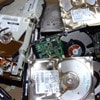
Tracking dots are the secret marks that many popular color laser printers and photocopiers scatter across every document they touch. The marks, almost invisible to the eye, uniquely identify the printer that produced the document, and, as EFF uncovered, can even automatically encode the time and date it was created.
It turns out that the European Commission, the executive wing of the EU (whose members include many former Eastern Bloc states), shares these concerns.
Given that including tracking systems in printers appears to be a U.S. government policy, how hard does the EU plan to pressure their ally for change in its secret agreements with printer manufacturers? Is the United States sharing its knowledge of how to decode these dots with individual EU nations' governments? And if so, what other governments, authoritarian or not, know the secret of tracking their citizens' publications?
Gunman opens fire at US college

A gunman has opened fire on students at a university near Chicago in the United States, wounding at least 15 people.
The shooting took place at Northern Illinois University, in De Kalb, 65 miles (100 km) west of Chicago.
Several people have been taken to hospital with serious head wounds. University officials say police confirm that the gunman killed himself.
Last Friday, a woman shot dead two fellow students before killing herself e at Louisiana Technical College in Baton Rouge. In Memphis, Tennessee, a 17-year-old is accused of shooting and critically wounding a student on Monday, and a 15-year-old was shot at a junior high school in California on Tuesday.
Comcast Defends Internet Practices

Comcast Corp. told the Federal Communications Commission in formal comments Tuesday that hampering some file-sharing by its subscribers was a justifiable way to keep Web traffic flowing for everyone.
Comcast says it must curb some file-sharing traffic because some subscribers would otherwise hog the cables with their uploads and slow traffic in their neighborhood.
The company - the country's second-largest Internet service provider - also said it was justified in using "reset" packets to break off communications between two computers.
Comcast sometimes inserts these packets in the data stream to kill a file-sharing session. The move "fools" each computer into believing the other computer wants to end the connection.
Illegal downloaders 'face UK ban'
People in the UK who go online and illegally download music and films may have their internet access cut under plans the government is considering.
A draft consultation suggests internet service providers would be required to take action over users who access pirated material via their accounts.
The Times suggested that broadband firms which failed to enforce the rules could be prosecuted, and the details of customers suspected of making illegal downloads made available to the courts.
Technology that allows internet providers to monitor what content is being downloaded is becoming more effective, said James Bates, media director at consultants Deloitte.
The Pirate Bay: No Drop in Danish Traffic
The IFPI (International Federation of the Phonographic Industry) fired some of the first shots earlier this week in Denmark. One of Denmark's most prominent ISPs, Tele2, was forced by a court decision to block The Pirate Bay from their customers.
According to The Pirate Bay's new Court Blog, Danish traffic has not dropped since the implementation of the block.
"...the number of visits from Denmark has increased by 12% thanks to IFPI," the blog post reads. "Our site http://thejesperbay.org is growing more because of the media attention than people actually coming to learn how to bypass the filter - our guess is that alot of the users on the site now run OpenDNS instead of the censoring DNS at Tele2.dk."
The Jesper Bay, a spin off of The Pirate Bay, provides users with detailed instructions on how to bypass the block. Using the OpenDNS option has proven so far to be the most popular method.
Scientology protests start across Australia

A global day of protest against the Church of Scientology organised by internet group "Anonymous" began today with demonstrations outside the church's Australian offices.
The protestors, who said they had worn masks to remain anonymous and prevent possible legal action or retribution from the church, chanted "Church on the left, cult on the right", "Religion is free" and "We want Xenu".
In a statement released this afternoon, the Church of Scientology's Oceania branch condemned the actions of Anonymous and described the group as "cyber-terrorists".
"Anonymous is perpetrating religious hate crimes against Churches of Scientology and individual Scientologists for no reason other than religious bigotry," the statement said.
Anti-Scientology demonstrations in Perth, Melbourne, Sydney and Adelaide were promoted from a blog called "anonaustralia" which offered flyers people could download and print to hand out at the demonstration and suggested attendees wear masks.
XP needs to live until 2009
Currently, the Vole plans to switch off the life support on XP in June even though the patient is not dead and is probably getting better.
Burton Group service director Richard Jones told Infoworld that in any operating system transition, you need to have the original and new products running side by side for a couple of years.This gives punters a chance to do a decent migration.
Jones added that the Vole had been a little too aggressive because it took too long to release Vista and this deprived it of cash. However, it was making users pay for its mistake, he said.
There was a chance that Microsoft would see customers abandoning Windows rather than being forced to move to Vista.
RIAA boss: Move copyright filtering to users' PCs

Sherman's a sharp guy, and he's fully aware that filtering will prompt an encryption arms race that is going to be impossible to win... unless users somehow install the filtering software on their home PCs or equipment.
This means moving the filter out of the network and onto the edges (local machines), since it's at the edges that decryption and playback occurs.
Sherman knows it's a tough sell. "Why would somebody put that on their machine?" he asked rhetorically. "They wouldn't likely want to do that."
The only way to make it work is to mandate the filters or have ISPs mandate that users install them to get on the Internet. The consumer backlash from such a plan would be like the force of a thousand supernovas, and it's hard to visualize this happening.