French Hadopi "3 Strikes" Anti-Piracy Company Hacked

The private company entrusted to carry out file-sharing network monitoring for the French government has been hacked.
Actually, hacked is probably too strong a word, since it appears TMG left the front door open.
"A virtual machine leaked a lot of information like scripts, p2p clients to generate fake peers, local physical addresses in the datacenter and even a password that could lead to a major global TMG security breach," French security researcher Olivier Laurelli, aka Bluetouff, just informed TorrentFreak.
"Taxing" Canadians' Patience & Pocketbooks

The CPCC collects "levies" on blank CDs and has desperately tried but failed twice in the Courts and recently with the Government and the Bill C-32 Committee to get an "iPod" tax.
It has now resurrected its efforts for a "levy" - or a "tax" as Ministers call it - on memory cards, such as Compact Flash.
At the time in 2003, the CPCC wanted "0.8c for each megabyte of memory in each removable electronic memory card, each removable flash memory storage medium of any type, or each removable micro-hard drive". On today's typical 16 GB card that sells for about $30 or less, that would be a "tax" of $128 - or about 400%.
Israeli forces open fire at Palestinian protesters

Clashes have been taking place at four separate borders or crossing points - at Erez in Gaza, near Ramallah in the West Bank, on the Golan Heights and at the border with Lebanon.
Syria denounced Israeli actions in the Golan Heights and Lebanon as "criminal", Agence France-Presse news agency reported.
On the Israel-Gaza frontier, at the Erez border crossing, Israeli troops opened fire with tanks and machine guns, injuring dozens, Palestinian medical officials said.
Apple Further Restricts Upgrade Options on New iMacs
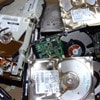
Since Late 2009, there's been a well-documented issue with the iMac line. If you upgrade the hard drive, the fans can start spinning like crazy.
For the main 3.5" SATA hard drive bay in the new 2011 machines, Apple has altered the SATA power connector itself from a standard 4-wire power configuration to a 7-wire configuration. Hard drive temperature control is regulated by a combination of this cable and Apple proprietary firmware on the hard drive itself. From our testing, we've found that removing this drive from the system, or even from that bay itself, causes the machine's hard drive fans to spin at maximum speed and replacing the drive with any non-Apple original drive will result in the iMac failing the Apple Hardware Test (AHT).
Senate bill amounts to death penalty for Web sites

The U.S. Department of Justice would receive the power to seek a court order against an allegedly infringing Web site, and then serve that order on search engines, certain Domain Name System providers, and Internet advertising firms--which would in turn be required to "expeditiously" make the target Web site invisible.
Any copyright holder also could file a lawsuit and seek to levy a less dramatic form of Internet punishment, blocking only "financial transactions" and "Internet advertising services" from doing business with the suspected infringer.
FBI: If We Told You, You Might Sue

In 2008, a few years after the Bush administration's warrantless-wiretapping program was revealed for the first time by the New York Times, Congress passed the FISA Amendments Act. That act authorizes the government to engage in dragnet surveillance of Americans' international communications without meaningful oversight.
The government doesn't want you to know whether your internet or phone company is cooperating with its dragnet surveillance program because you might get upset and file lawsuits asserting your constitutional rights.
Libya rebels 'capture Misrata airport'
Hundreds of rebels were celebrating in the streets after pro-Gaddafi forces fled, leaving behind tanks that were set on fire, witnesses said.
Government forces have sown anti-shipping mines off the harbour, used Russian-made Grad rockets to scatter anti-vehicle mines in the port, and set fuel storage tanks ablaze with missile strikes, according to rebels and human rights groups.
Facebook caught exposing millions of user credentials

Facebook has leaked access to millions of users' photographs, profiles and other personal information because of a years-old bug that overrides individual privacy settings, researchers from Symantec said.
Facebook over the years has regularly been criticized for compromising the security of its users, which now number more than 500 million. The company has rolled out improvements, such as always-on web encryption, although users still must be savvy enough to turn it on themselves, since the SSL feature isn't enabled by default.
World's servers process 9.57ZB of data a year
Three years ago, the world's 27 million business servers processed 9.57 zettabytes, or 9,570,000,000,000,000,000,000 bytes of information.
Researchers at the School of International Relations and Pacific Studies and the San Diego Supercomputer Center at the University of California, San Diego, estimate that the total is equivalent to a 5.6-billion-mile-high stack of books stretching from Earth to Neptune and back to Earth, repeated about 20 times.
Think file-hosting sites guard your private data? Think again
"These services adopt a security-through-obscurity mechanism where a user can access the uploaded files only by knowing the correct download URIs," the researchers wrote in a paper presented at the most recent USENIX Workshop on Large-Scale Exploits and Emergent Threats.
They also used the sites to store private files that contained internet beacons, so they'd know if anyone opened them. Over a month's span, 80 unique IP addresses accessed the so-called honey files 275 times.