Dirty Texting Banned By Pakistan Telecom Authority

The Pakistan Telecommunication Authority (PTA) has handed down a ban on about 1,600 terms and phrases it has deemed obscene, including the word "harder," for one.
Words on the list, which has been floating around on Twitter, run the gamut from "barf" to "Jesus Christ" to "back door" to "do me."
Published in both English and Urdu, it includes such words and phrases as "idiot," "monkey crotch," "athlete's foot," "damn," "deeper," "four twenty," "fornicate," "looser," and "go to hell," among others.
Full disk encryption is too good, says US intelligence agency

The study, titled “The growing impact of full disk encryption on digital forensics,” illustrates the difficulty that CSI teams have in obtaining enough digital data to build a solid case against criminals.
The paper does go on to suggest some ways to ameliorate these issues, though: Better awareness at the evidence-gathering stage would help, but it also suggests “on-scene forensic acquisition” of data, which involves ripping unencrypted data from volatile, live memory (with the cryogenic RAM freezing technique, presumably).
'Occupy Flash' developers want to kill off Adobe browser plug-in

"Flash Player is dead. Its time has passed. It's buggy. It crashes a lot. It requires constant security updates," said the Occupy Flash site. "It's a fossil, left over from the era of closed standards and unilateral corporate control of web technology."
Occupy Flash urged browser users to uninstall Flash Player, and provided instructions for both Windows and Mac OS X users to do so. It also called on developers on stop using Flash in future projects, and encouraged users to upgrade to a browser that supports HTML5.
"We're pretty realistic about the facts," said the Occupy Flash spokesman. "Flash Player is on like 99% of the desktops. Our little movement won't change that, but we want to start the conversation.
European Parliament warns of global dangers of US domain revocation proposals
The European Parliament today adopted, by a large majority, a resolution on the upcoming EU/US summit stressing “the need to protect the integrity of the global internet and freedom of communication by refraining from unilateral measures to revoke IP addresses or domain names.”
This situation is now turning critical, with legislative proposals such as the Stop Online Piracy Act (SOPA) and the PROTECT IP Act claiming worldwide jurisdiction for domain names and IP addresses. The definitions in SOPA are so broad that, ultimately, it could be interpreted in a way that would mean that no online resource in the global Internet would be outside US jurisdiction.
At Web censorship hearing, Congress guns for "pro-pirate" Google
This wasn't a hearing designed to elicit complex thoughts about complex issues of free speech, censorship, and online piracy; despite the objections of the ACLU, dozens of foreign civil rights groups, tech giants like Google and eBay, the Consumer Electronics Association, China scholar Rebecca MacKinnon, hundreds of law professors and lawyers, the hearing was designed to shove the legislation forward and to brand companies who object as siding with "the pirates."
How low was the level of debate? The hearing actually descended to statements like "the First Amendment does not protect stealing goods off trucks" (courtesy of the AFL-CIO's Paul Almeida).
RIAA wants ReDigi out of the business of selling "used" iTunes tracks

ReDigi must "quarantine any copies on its servers of our Member's sound recordings so that those recordings are not exploited in any manner," the RIAA's Jennifer L. Pariser insists. On top of that, ReDigi must erase from its website "all references to the names and likenessess of artists signed to RIAA members" and break any ongoing connections between the operation's current downloaders and its servers.
Next, RIAA wants ReDigi to fork over "an accounting of all sales achieved and revenue generated" from RIAA member sound recordings through the ReDigi service, "so that we can discuss a resolution of our Members' claims."
Finally comes this kicker: "After our Members' claims are resolved, we expect that you will destroy the quarantined sound recordings."
PETA goes after Mario and his Tanooki suit

People for the Ethical Treatment of Animals recently began calling the new Super Mario 3D Land for the Nintendo 3DS insensitive to the hunting and killing of real-life tanuki racoon dogs for fur.
Splattering animated blood on their site and flashing "Mario Kills Tanooki" is a bit harsh, even for a organization that has links to known arsonists and the ALF, a group declared by the Department of Homeland Security to be a "terrorist threat."
A faster Web server: ripping out Apache for Nginx
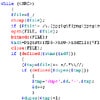
Nginx (pronounced "engine-ex") is a lightweight Web server with a reputation for speed, speed, speed. It differs from Apache in a fundamental way—Apache is a process- and thread-driven application, but Nginx is event-driven. The practical effect of this design difference is that a small number of Nginx "worker" processes can plow through enormous stacks of requests without waiting on each other and without synchronizing; they just "close their eyes" and eat the proverbial elephant as fast as they can, one bite at a time.
For larger websites, it's often employed as a front-end Web server to quickly dish up unchanging page content, while passing on requests for dynamic stuff to more complex Apache Web servers running elsewhere.
Italy crisis: Silvio Berlusconi resigns as PM

Mr Berlusconi is Italy's longest-serving post-war prime minister. His premiership has recently been marred by many scandals.
After losing his parliamentary majority on Tuesday, Berlusconi promised to resign when austerity measures, demanded by the EU and designed to restore markets' confidence in the country's economy, were passed by both houses of parliament.
But he is currently involved in several trials for fraud, corruption and having sex with an under-age girl, and has attracted media attention for so-called "bunga-bunga" parties which young women were allegedly paid to attend.
At $400 million, Modern Warfare 3 launch the biggest yet
According to the game's publisher, Activision, Modern Warfare 3 generated over $400 million in revenue and sold 6.5 million units in the U.S. and U.K. in its first 24 hours on store shelves. By hitting that mark, Modern Warfare 3, which launched Tuesday, easily outpaced its predecessor and the former leader, Call of Duty: Black Ops, which generated $360 million on its launch day last year. Call of Duty: Modern Warfare 2 had the best launch of all time prior to Black Ops, posting launch-day sales of $310 million.
Last year, the company announced that Black Ops set a six-week sales record by generating $1 billion in revenue.