Dear Jailbreaker, Apple Wants to Have a Word with You

After banning the word "jailbreak" from its app store and music library, Apple today reversed course and again permits the term - slang for hacking into a device to download unauthorized content -- to appear on iTunes and its App Store.
Apple maintains it forces sales of company-approved content through its proprietary stores to enhance security and reduce piracy. And while jailbreaking is legal, it violates the terms of use and voids the warranty on iDevices.
Microsoft to charge customers $99 to remove OEM 'crapware'
The OEMs are paid by a variety of software makers to install crapware onto systems. The OEMs don’t disclose how much money they receive from this, but sources tell me that it works out at a few dollars per PC.
Consumers are expected to take their new PC to a Microsoft Store — though there are currently only 16 of them in the United States — and pay Microsoft $99 to remove the crapware that the OEMs were paid to install.
Feds considering allowing DVD-encryption cracking

Federal regulators considered testimony Wednesday here at UCLA Law School on whether to allow citizens and filmmakers to legally crack DVD encryption meant to protect the discs from being copied.
Clarissa Weirick, the general counsel of Warner Brothers Home Entertainment, testified against all the decryption measures.
"If we didn't have access controls, there might be the same kind of mass piracy we've seen with unprotected music," Weirick said about the copying of DVDs.
They said that there is no need to grant the public the right to make copies of their DVDs because the studios are streaming and selling movies online now, and that the public does not own the movies they buy on DVDs. They own the license to play it on a DVD, they argued.
Justice Dept. Defends Public’s Constitutional ‘Right to Record’ Cops
In a surprising letter sent on Monday to attorneys for the Baltimore Police Department, the Justice Department also strongly asserted that officers who seize and destroy such recordings without a warrant or without due process are in strict violation of the individual’s Fourth and Fourteenth Amendment rights.
Police officers should not interfere with a recording and should never seize recording devices without a warrant. They should also be advised “not to threaten, intimidate, or otherwise discourage an individual from recording police officer enforcement activities or intentionally block or obstruct cameras or recording devices.”
Oracle v Google Judge Is A Programmer!
One month into the Oracle v Google trial, Judge William Alsup has revealed that he has, and still does, write code.
"I have done, and still do, a significant amount of programming in other languages. I've written blocks of code like rangeCheck a hundred times before. I could do it, you could do it. The idea that someone would copy that when they could do it themselves just as fast, it was an accident."
"Judge: rangeCheck! All it does is make sure the numbers you're inputting are within a range, and gives them some sort of exceptional treatment. That witness, when he said a high school student could do it--"
Chile Threatens to Pull out of TPP because of US IP demands

Contreras posits that, although “it makes sense” for Chile to participate in the negotiation by the TPP because it was one of the countries who formed the original “P4″ (with Brunei, New Zealand and Singapore) on which TPP is based, Chile is now reassessing whether it should remain in the negotiation.
The P4 had a scant four pages on intellectual property that primarily affirmed TRIPS, with additional listings of geographic indicators and obligations to enter WIPO performances treaties. When the US entered the agreement and pushed it to expand into what is now the TPP, it came with hundreds of incredibly specific intellectual property demands, many of them exceeding any standard in any bilateral or multilateral agreement between any parties.
How The Counting Crows Learned To Stop Worrying and Love BitTorrent

The Counting Crows released their new album Underwater Sunshine three weeks ago, but today they also partnered with BitTorrent to release a free bundle of new tracks, liner notes and artwork as a way of accessing a broader fanbase.
The Counting Crows left their record label in 2009. At the time, frontman Adam Duritz said that the label simply wasn’t equipped to let them play with the internet in the way that they wanted.
BitTorrent users are 31% more likely to purchase digital singles and 100% more likely to pay for a music subscription service.
Microsoft Funded Startup Aims to Kill BitTorrent Traffic
The company has developed a technology which allows them to attack existing BitTorrent swarms, making it impossible for people to share files.
“We used a number of servers to make a connection to each and every P2P client that distributed this film. Then Pirate Pay sent specific traffic to confuse these clients about the real IP-addresses of other clients and to make them disconnect from each other,” Andrei Klimenko says.
Pirate Pay don’t disclose their exact rates but say they charge between $12,000 and $50,000 depending on the scope of the project.
Court Forbids Linking to Pirate Bay Proxies
The Court has forbidden the Dutch Pirate Party from linking to, operating or listing websites that allow the public to circumvent a local Pirate Bay blockade. The political party is further ordered to shutdown its reverse proxy indefinitely and block Pirate Bay domains and IP-addresses from its generic proxy.
The Court specifically ruled that the Party’s reverse proxy has to remain offline. It was further ordered that Pirate Bay domains and IP-addresses have to be filtered from the Pirate Party’s generic proxy. In addition the Pirate Party can’t link to other websites that allow the public to bypass the blockade.
"A bizarre operation": Why West Virginia stuck $22,600 routers in tiny libraries
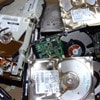
West Virginia's Charleston Gazette has been hopping mad this week as one of its reporters learned that the state has been sticking 1,064 high-end $22,600 routers into “little public institutions as small as rural libraries with just one computer terminal.”
By the time someone in the state Office of Technology wrote in an e-mail that “this equipment may be grossly oversized for several of the facilities in which it is currently slated to be installed," it was too late.
"At the end of the day, I suspect we've made some mistakes," State Commerce Secretary Keith Burdette said this week. "I'm reading stuff in your stories and learning stuff in the process."