Broad coalition sues feds to halt electronic surveillance by National Security Agency

Environmental and human rights activists, church leaders and gun rights advocates found common ground on Tuesday, filing a lawsuit against the federal government to halt a vast National Security Agency electronic surveillance program.
It seeks an injunction against the NSA, Justice Department, FBI and directors of the agencies, and challenges what the plaintiffs describe as an “illegal and unconstitutional program of dragnet electronic surveillance.”
Putin: Snowden 'shifting position' on meeting asylum conditions

Putin had said earlier that Snowden would have to "stop his work aimed at harming our American partners" if he wanted to stay in the country. That reportedly prompted Snowden to withdraw an asylum request in early July.
But on Friday, Snowden reportedly said that he will not harm the United States in the future.
Over the weekend, a journalist who first published the leaked documents said that Snowden has more damaging information that could be a "nightmare" for the U.S. government.
Guess who doesn't get radar tickets in Colorado? Politicians
State senators and representatives in Colorado have special license plates that just happen not to be in the DMV database. So, if they speed, they never receive a citation.
This whole miasma only emerged when Evonne Estis began to get tickets for indiscretions that she knew weren't hers.
However, she has the vanity plate "33," which happens to be the same number assigned to state Sen. Mike Johnston on his senatorial plate.
Naturally, now that the authorities have been informed of this little quirk, they are muttering about taking action.
Japanese Gov't Accidentally Shares Internal Email Over Google Groups

An official at Japan's Ministry of the Environment created the group to share mails and documents related to Japan's negotiations during the Minamata Convention, a meeting held in Geneva in January to create international standards to limit international mercury use. But the official used the default privacy setting, leaving the exchanges open to searches and views in the months since.
HP Keeps Installing Secret Backdoors In Enterprise Storage
For the second time in a month, Hewlett-Packard has been forced to admit it built secret backdoors into its enterprise storage products. The admission, in a security bulletin posted July 9, confirms reports from the blogger Technion, who flagged the security issue in HP's StoreOnce systems in June, before finding more backdoors in other HP storage and SAN products.
The account also provides access to a factory-reset control that would allow intruders to destroy much of the data and configurations of a network of HP storage products. And it's not hard to find: 'Open up your favourite SSH client, key in the IP of an HP D2D unit. Enter in yourself the username HPSupport, and the password which has a SHA1 of 78a7ecf065324604540ad3c41c3bb8fe1d084c50.
Revealed: how Microsoft handed the NSA access to encrypted messages
Microsoft helped the NSA to circumvent its encryption to address concerns that the agency would be unable to intercept web chats on the new Outlook.com portal
The agency already had pre-encryption stage access to email on Outlook.com, including Hotmail
The company worked with the FBI this year to allow the NSA easier access via Prism to its cloud storage service SkyDrive, which now has more than 250 million users worldwide
How DRM Won

Streaming media services are the ultimate form of copy protection—you never actually control the media files, which are encrypted before delivery, and your ability to access the content can be revoked if you disagree with updated terms of service; you’re also subject to arbitrary changes in subscription prices.
Since streaming services host the multimedia content and send it to you upon each request for playback, they can always deny the request. Netflix streaming content sometimes features impending expiration dates. In April, Netflix decided to limit access to two concurrent streams per subscriber, putting an end to years of informal password sharing between roommates, acquaintances, and family members.
US agency baffled by modern technology, destroys mice to get rid of viruses
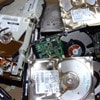
EDA's CIO, fearing that the agency was under attack from a nation-state, insisted instead on a policy of physical destruction. The EDA destroyed not only (uninfected) desktop computers but also printers, cameras, keyboards, and even mice.
The agency demonstrated serious technical misunderstandings—it shut down its e-mail servers because some of the e-mails on the servers contained malware, even though this posed no risk to the servers themselves—and a general sense of alarmism.
Egypt unrest: Interim leader outlines election timetable
Egypt's interim leader has outlined his timetable for new elections, amid continuing unrest in the country.
Speaking to journalists, army spokesman Col Ahmed Mohammed Ali said a group armed with live ammunition, petrol bombs and stones had attacked security forces.
Venezuela awaits Snowden's response to asylum offer
The nation has not had any communication with Snowden and is waiting to see whether he accepts its offer, Foreign Affairs Minister Elias Jaua told state television Saturday.
Venezuela is one of three left-leaning Latin American nations that, to varying degrees, have said they'd welcome the U.S. intelligence leaker. The others are Bolivia, which has offered asylum, and Nicaragua, which said it would consider it.
"So it is with great grief I have to announce that Snowden will not be getting any form of shelter in Iceland because the current government doesn't even have enough spine for the parliament to discuss Snowden's request," Jonsdottir wrote on her blog.