Viagra slows the spread of malaria, study finds

Viagra doesn't just have a stiffening effect on men's anatomy, it also makes the one-celled parasite that causes malaria more rigid.
Using an artificial spleen, the team found that certain drugs such as Viagra, also known as sildenafil, could stiffen these cells by inhibiting an enzyme that would normally make them squishy. The stiff cells are then cleared by the spleen.
Microsoft's charm offensive is actually working (a little)
The idea behind the campaign is simple. If you don't let Cortana remind you of the things you need to do, you might just make a mess.
Not for a second am I suggesting that these are the greatest ads ever made. But here's Microsoft embracing a touch of wit and humanity, as well as a refreshing simplicity.
Pandora ordered to pay up extra royalties in BMI row

The ruling is expected to have a deleterious effect on the amount of money Pandora will sink into paying off the publishers who provide its songs.
Royalty fees have long been an issue of contention between Pandora and song publishers. Pandora argues that it already pays a hefty fee for the songs it offers customers, while record labels and musicians have charged Pandora with trying to short-change musicians.
Minecraft videos - why are they so addictive?
Minecraft, the online world that most parents simply don't understand, is now officially the most watched game of all time on YouTube.
Researchers in China, for example, performed magnetic resonance imaging (MRI) studies on the brains of 18 college students who spent an average of 10 hours a day online, primarily playing games like World of Warcraft. Compared with a control group who spent less than two hours a day online, gamers had less grey matter (the thinking part of the brain).
What the BLEEP? BitTorrent's secure messaging app arrives
Bleep can now be had for iThings, Android, Windows and Mac OS. The app promises server-less, peer-to-peer, text or voice communications. The outfit says “we keep messages and the encryption keys for images stored on your local device, not the cloud”. The apps are said to leave no metadata trail, either.
Firefox 38 arrives with DRM tech required to watch Netflix video
The most important addition to Firefox 38 is undoubtedly integration with the Adobe Content Decryption Module (CDM) to play back DRM-wrapped content on Windows Vista and later. Mozilla announced the controversial (given the closed nature of DRM) move just under a year ago.
The CDM in question is downloaded from Adobe shortly after you install Firefox 38 or higher, and it activates when you first interact with a site that uses Adobe CDM. Mozilla says some premium video services, including Netflix, have already started testing the solution in Firefox.
Worker fired for disabling GPS app that tracked her 24 hours a day

A Southern California woman claims she was fired after uninstalling an app that her employer required her to run constantly on her mobile phone—an app that tracked her every move 24 hours a day, seven days a week.
"After researching the app and speaking with a trainer from Xora, Plaintiff and her co-workers asked whether Intermex would be monitoring their movements while off duty. Stubits admitted that employees would be monitored while off duty and bragged that he knew how fast she was driving at specific moments ever since she installed the app on her phone."
SSDs lose data if left without power for just 7 days
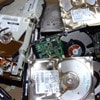
According to a recent presentation by Seagate's Alvin Cox, who is also chairman of the Joint Electron Device Engineering Council (JEDEC), the period of time that data will be retained on an SSD is halved for every 5 degrees Celsius (9 degrees Fahrenheit) rise in temperature in the area where the SSD is stored.
Consumer class SSDs can store data for up to two years before the standard drops, but when it comes to SSDs used by enterprises, the drives are only expected to retain data for a period of three months – a fact confirmed by Samsung, Seagate and Intel's own ratings on their products.
Move over, Raspberry Pi. This startup is building a $9 computer
Dave Rauchwerk and a team of eight people are creating a $9 computer, designed to dovetail the success of their $249 Raspberry Pi-based camera. Their $1 million venture-backed startup, Next Thing Co., aims to put this crazy-cheap, hackable computer into the hands of as many people as possible.
"What we're doing is taking technology from tablets from a few years ago and making it palatable and smoothing over the rough parts so that [people] like us can use it for projects," he added. "The thing that's really exciting is that if we as a community can agree on a chip to support and a platform and some software we can make sure that a $9 computer is a thing."
Weak Homegrown Crypto Dooms Open Smart Grid Protocol
The paper, “Dumb Crypto in Smart Grids: Practical Cryptanalysis of the Open Smart Grid Protocol” explains how the authenticated encryption scheme used in the OSGP is open to numerous attacks—the paper posits a handful—that can be pulled off with minimal computational effort.
“Protocol designers should stick to known good algorithms or even the ‘NIST-approved’ short list,” Crain said. “In this instance, the researchers analyzed the OMA digest function and found weaknesses in it. The weaknesses in it can be used to determine the private key in a very small number of trials.”