After second bungle, IRS suspends Equifax’s “taxpayer identity” contract

Last week we brought news that the Internal Revenue Service awarded a $7.2 million contract to Equifax to allow Equifax to "verify taxpayer identity." The contract was awarded days after Equifax announced it had exposed the personal data, including Social Security numbers, of about 145 million people.
The IRS said it is investigating the security of Equifax's systems during this suspension, which could be lifted if Equifax gets a clean bill of health.
How Facebook Outs Sex Workers

Leila is a sex worker. She goes to great lengths to keep separate identities for ordinary life and for sex work, to avoid stigma, arrest, professional blowback, or clients who might be stalkers (or worse).
Despite the fact that she’d only given Facebook information from her vanilla identity, the company had somehow discerned her real-world connection to these people—and, even more horrifyingly, her account was potentially being presented to them as a friend suggestion too, outing her regular identity to them.
It’s not a question that Facebook is willing to answer. The company is not forthcoming about how “People You May Know,” known internally as PYMK, makes its recommendations.
Ebay paid UK corporation tax of £1.6m in 2016
The company declined to explain how its UK revenues were not booked though its UK business.
The seeming ability of the company to shelter most its UK profits from the UK tax authorities raises again the ability of big international companies to route their revenues to the countries with the most favourable tax regimes.
Google: This may shock you, but we also banked thousands of dollars to run Russian propaganda

Joining Facebook and Twitter, Google has now been sucked into an investigation into how Russia influenced the US presidential elections last year.
The social media giants have based their estimates on spending from obvious Russian government accounts, but it would not be difficult for a state actor to create dozens or hundreds of profiles using different countries and currencies. So far, we have yet to see the total ad spending on the types of articles the Russian government paid money to promote.
German Firefox users to test recommendation engine 'a bit like thought-reading'
Mozilla has decided to experiment on its German users by opting-in around one per cent of them to a search recommendations service that slurps their browsing histories.
Mozilla's German language blog styles the idea as an “experiment” and explains that “the surfing activities of those users who receive a Firefox version with Cliqz are sent to the Cliqz servers; including the URLs of the pages they visit.”
Facebook security chief responds to news algorithm critics
Facebook's security chief is warning critics that the fake news problem is more complicated than many are aware.
Facebook has drawn flak for its role in perpetuating hoaxes and its influence on the presidential election, and has in recent months worked to combat the rise of fake news. In response, the company said in August it would expand a program to offer related articles on a trending topic that offer fact-check articles and other perspectives.
Secure coding in Java: Bad online advice and confusing APIs
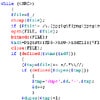
A group of Virginia Tech researchers has analyzed hundreds of posts on Stack Overflow, a popular developer forum/Q&A site, and found that many of the developers who offer answers do not appear to understand the security implications of coding options, showing a lack of cybersecurity training.
“These poor coding practices, if used in production code, will seriously compromise the security of software products,” the researchers pointed out.
Teens 'rebelling against social media', say headteachers
A survey of almost 5,000 students, mainly aged between 14 and 16, found a growing backlash against social media - with even more pupils (71%) admitting to taking digital detoxes to escape it.
Chris King, chair of the HMC and Headmaster of Leicester Grammar School, said the findings were among "the first indications of a rebellion against social media".
Hundreds of Printers Expose Backend Panels and Password Reset Functions Online

One of the cause of some of these exposures is Brother's choice of shipping the printers with no admin password. Most organizations most likely connected the printers to their networks without realizing the admin panel was present and wide open to connections.
An attacker could include spyware-like behavior in tainted firmware updates and have printers send copies of printed documents to an attacker's server.
Judge Recommends ISP and Search Engine Blocking of Sci-Hub in the US

Sci-Hub, which is regularly referred to as the "Pirate Bay of Science," faces one of the strongest anti-piracy injunctions we have seen in the US to date. A magistrate judge in Virginia has recommended a broad order which would require search engines and Internet providers to block the site.
Sci-Hub itself doesn’t seem to be too bothered by the blocking prospect or the millions in damages it faces. The site has a Tor version which can’t be blocked by Internet providers, so determined scientists will still be able to access the site if they want.